A little earlier in the year, Idle Hour, a new Matcha company, very kindly gifted me a tin of their Yamane-en Senzoku Matcha to try along with a beautiful chawan, & while they did not ask me to post about either & just wanted to hear my feedback, I felt it important to share my thoughts on my overall experience with the matcha with you all to help shine a light on Idle Hour, not only because they are new and our overall aims align well, but also because they are based in the UK & it can be so hard to find good matcha here. I want to do what I can to use my platform to help the matcha companies here that are providing quality matcha.
They gave me the option to pick any matcha I wanted to try from the small but well curated range, and I was instantly drawn towards this one from the way that they described it on their website ‘’Selected by tea master Michio Shiobara of Yamane-en, a small family-run tea shop near Sugamo in Tokyo. Shiobara-san has spent over forty years sourcing leaves from small villages across Japan, and this matcha reflects that eye: sweet, creamy, with a rich umami aftertaste and almost no bitterness.’’ & I was instantly intrigued to see whether or not it would live up to its description, especially given how much I like to experiment with each matcha when collating notes for reviews.
Here’s the run down on this matcha before I jump into my review:
Grade: Ceremonial grade blend
Origin: Shizuoka, Kagoshima, and Shiga, Japan
Cultivar: Mainly Okumidori
Harvest: First flush (spring)
Grinding: Ball mill ground
Tasting notes: Sweet & creamy · Rich umami aftertaste · Refreshing finish
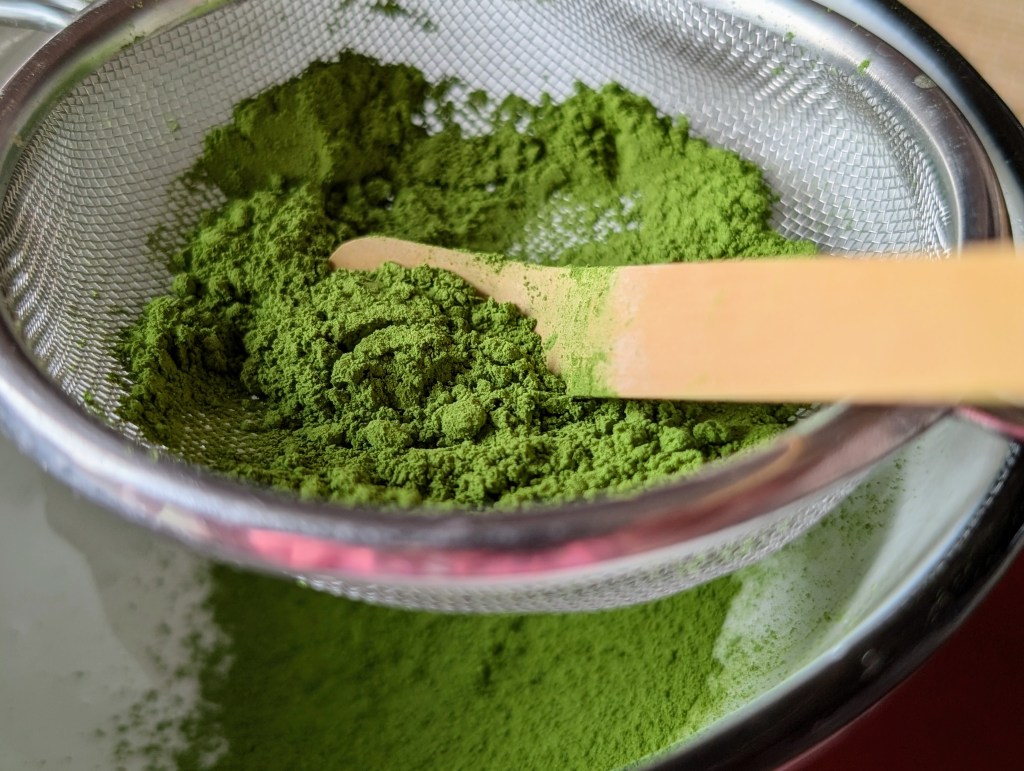
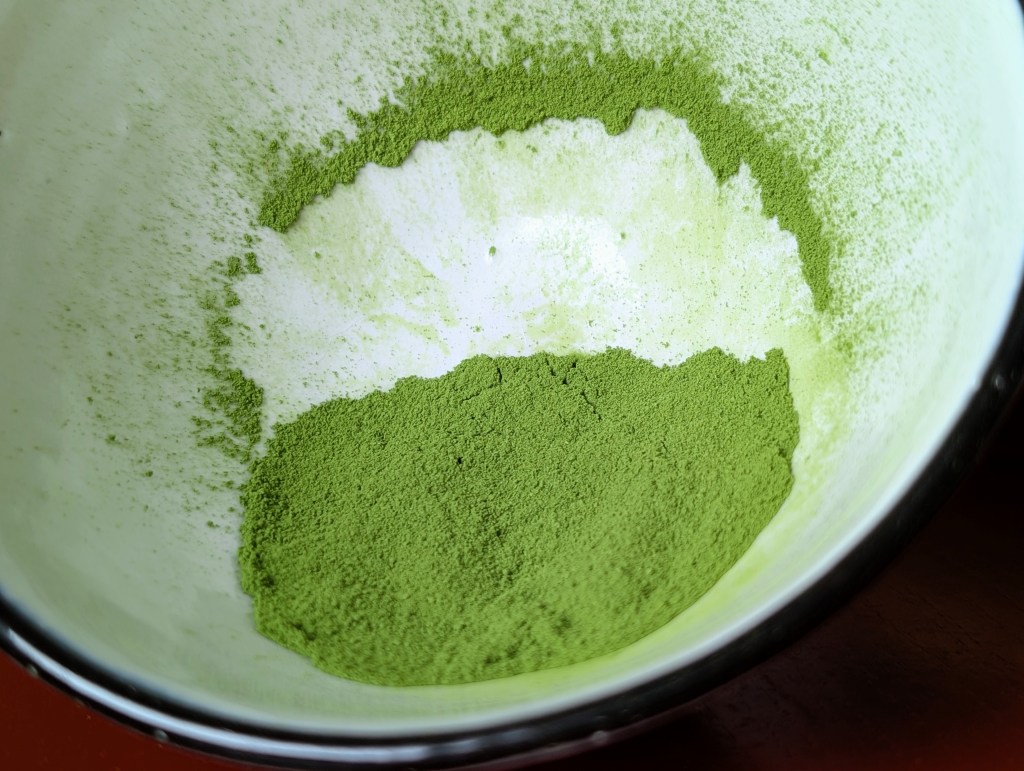
The dry powder has an aroma that is sweet, softly creamy & nutty, with a slight vegetal sharpness & notes of: roasted nuts, toasted rice, milk chocolate, raw oats, cereal milk & sesame seeds. With the addition of water, the vegetal notes become much stronger and they become much easier to characterise.
Within the flavour profile of this matcha is a medium level of sweetness and toastiness, alongside low level bitterness and astringency & rich umami aftertaste. It has a balanced vegetal presence with additional notes of roasted nuts, toasted rice, cress, dried mint, honey butter flavoured crisps, perfectly golden chips, milk chocolate with chunks of biscuit within it & warm oat milk.

Using water at a hotter temperature results in slightly higher levels of astringency & vegetal bite, and thus throws off the balance present when it is prepared using water of a lower temperature. While I assumed that would be the case, other matcha I have tried have surprised me in gaining more balance with slightly hotter water alongside amplified brightness, however that was not the case with this matcha & it undoubtedly performs better when prepared with water around 65-70.
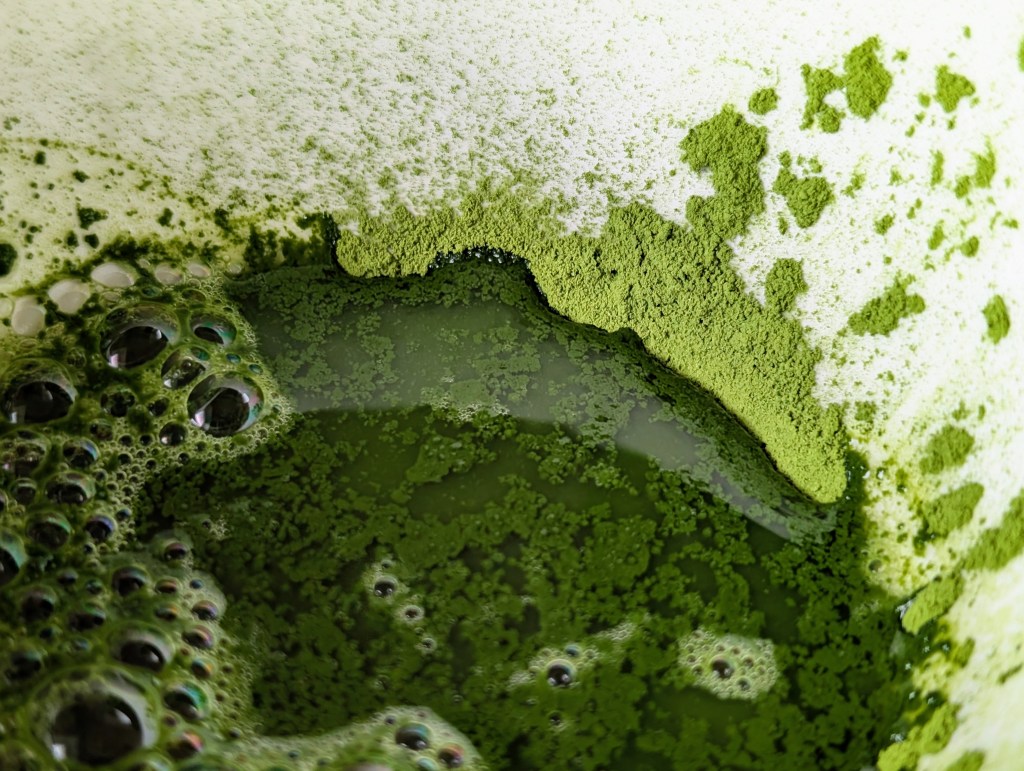
Considering the fact that matcha is best when prepared with low temperatures, I decided to prepare it iced, firstly with a little frothed milk added to see how it stood its ground against extremely cold temperatures and the addition of milk & then afterwards as iced usucha.
The iced latte was prepared using oat milk and with matcha prepared using lower temperature water, due to the results of previous temperature experiments. The resulting latte was great and somewhat surprising, with the dried mint notes being much more amplified than they once were, with the creaminess of the milk also helping to amplify the creamy notes within the matcha. The buttery notes moved to the aftertaste and lingered for a while and the only ones that were a little subtler were the notes of toasted rice and roasted nuts.
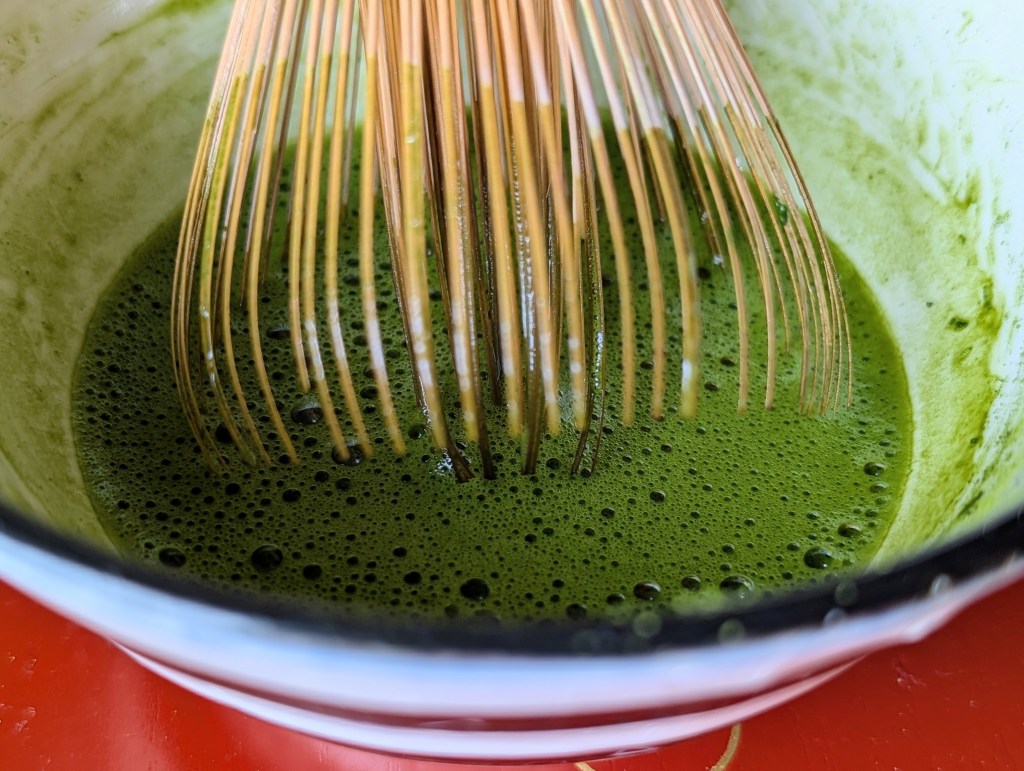
The iced usucha was just as enjoyable, smooth and refreshing as the iced latte, only without the amplified creaminess of the added oat milk. The note of dried mint was again amplified and lingered for a long time, but without the presence of the oat milk, the notes of cress and roasted notes were also much stronger, and the starchy buttery notes were much more present.
Texturally when prepared as usucha, it is refreshingly astringent, with medium creaminess, soft natural sweetness, with a refreshing finish that only changes when prepared with hotter water when the addition of lingering notes of creamed sweetcorn make themselves known. When prepared iced, both as a latte and on its own, the lingering notes are predominantly the dried mint, followed by the cress and finally the starchy butteriness.
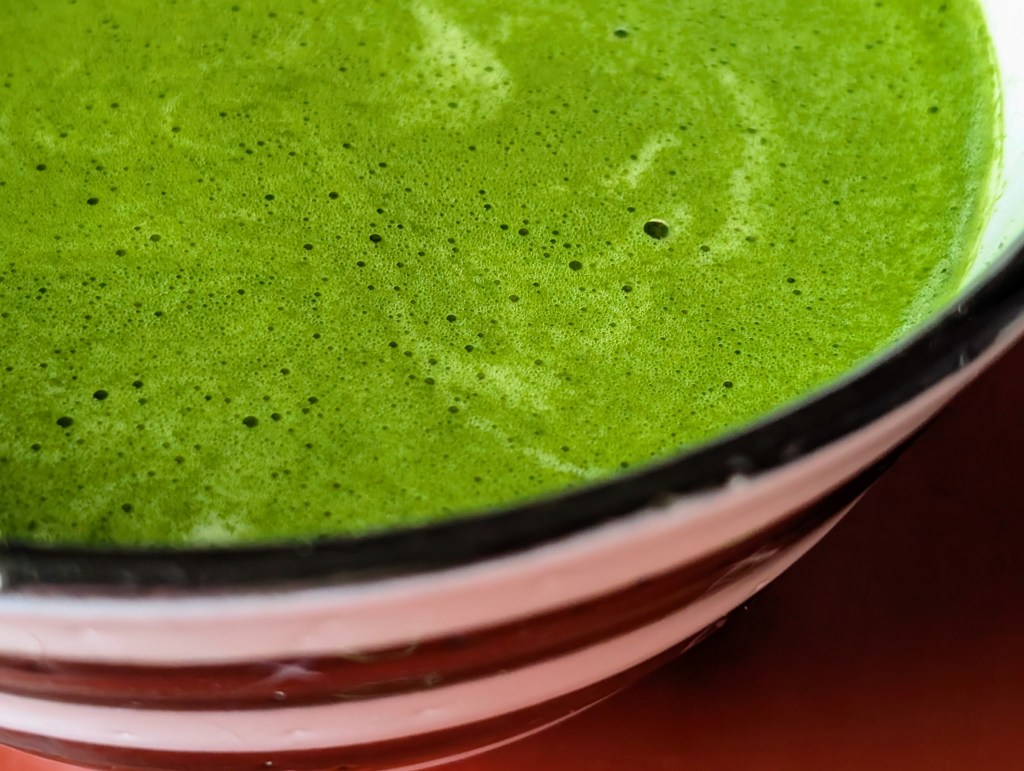

As previously mentioned in this post, I was not asked to review this matcha or to post about it at all, but I thoroughly enjoyed this matcha and discovered the uniqueness it held within it throughout my experiments. Idlehour definitely made a great first impression on me with this matcha, and I look forward to trying more of the matcha from their small but well curated range in the future, and I can’t wait to see how they continue to grow as a brand moving forward.
If you’re in the UK and you want to try this matcha yourself you can find it here on the Idle Hour website.
Art Pairing: Two Opposing Forms, Grey & Green, 1969 – Barbra Hepworth (Irish marble with colour)
The piece of art I picked for this pairing took me a little longer to decide upon than a lot of others have done because I wasn’t sure, even after a handful of sessions and multiple experiments, what direction I wanted to go in. I in fact did not decide upon this specific piece until I was coming to the end of the tin, but that was because I knew I wanted to do something different with this tea and look into different areas of the art world to find a piece of art that would represent the experience provided by this matcha and the results of my experiments as a whole in the most accurate way.
I am unsure of exactly why, but I felt drawn to explore the world of sculpture & the work of one of my favourite sculptors, Barbara Hepworth. While there are definitely many different Hepworth sculptures I could have picked for this pairing, as soon as I laid my eyes on Two Opposing Forms, Grey & Green, I knew that I had found the perfect partner piece to represent this matcha.
I picked this piece specifically because the two forms featured perfectly encapsulate everything this matcha has to offer, mirroring the many shades of green found as the matcha goes from dry to wet and changes dramatically with simply the addition of water. The layers of each of those shades of green serve as a great representation of the way matcha looks in a chawan, with deep dark emerald green hidden underneath a creamy lighter green foam. The way in which the layers of green swirl and mix with the creamy whites is a mirror of the natural creaminess that is found in this matcha that provides balance to the flavor profile.
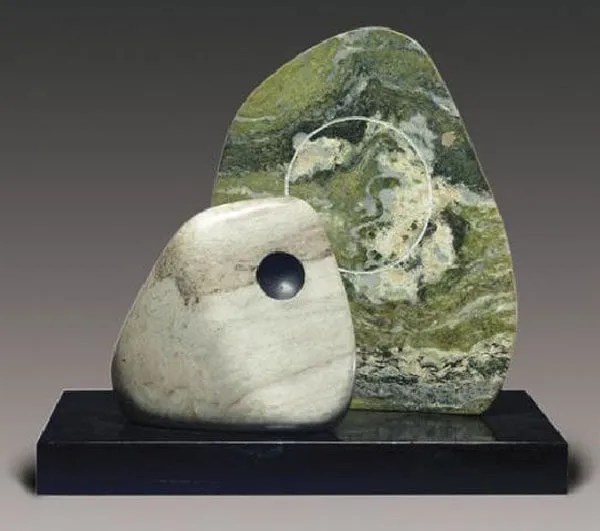
But beyond those aforementioned connections to the tea, there lies a deeper connection between the two, as both elements of the sculpture feature prominent etched circles, a white ring on the green stone and a carved black void in the white stone.
In Zen philosophy, this shape strongly evokes the Ensō (Japanese: 円相, “circular form”) that is said to symbolise the perfect meditative state of enlightenment, but can also symbolise strength, truth, single-mindedness, the entirety of the universe, equality and the void, the drawing of which is more than artistic creation and just like the preparation of matcha, it is a meditative practice that helps in training the mind to let the body create when free from overthinking, making the symbolic geometry of the sculpture a perfect backdrop for contemplation & an accurate outward representation of the way in which preparing and drinking this matcha makes me feel.
They truly are the perfect counterpart for each other and I’m so glad I pushed myself out of my comfort zone and went in a completely new direction for this pairing & I can’t wait to continue to do so time & time again moving forward.
Until next time, Happy Steeping – Kimberley


You must be logged in to post a comment.