I make no secret of the fact that I thoroughly enjoyed Haru Matcha’s Hana Matcha, so when they asked me if I wanted to try their Kasumi Matcha, I of course said yes and eagerly awaited its arrival at my door. I couldn’t wait to jump straight into trying it and experimenting with it, in order to discover whether I would enjoy it more than the Hana matcha.
Kasumi (meaning “mist”) takes its name from the smoky & nutty flavour profile of this matcha where the strong Yame tea leaves are roasted at a higher temperature. It is made in small batches with deep care in Yame in the south of Japan & here’s all the information you need to know about it before I jump into my review.

Cultivar: Yabukita
Region: Yame, Fukuoka
Elevation: High, Mountainous
Harvest: First-Harvest
Milling Method: Stone-Milled
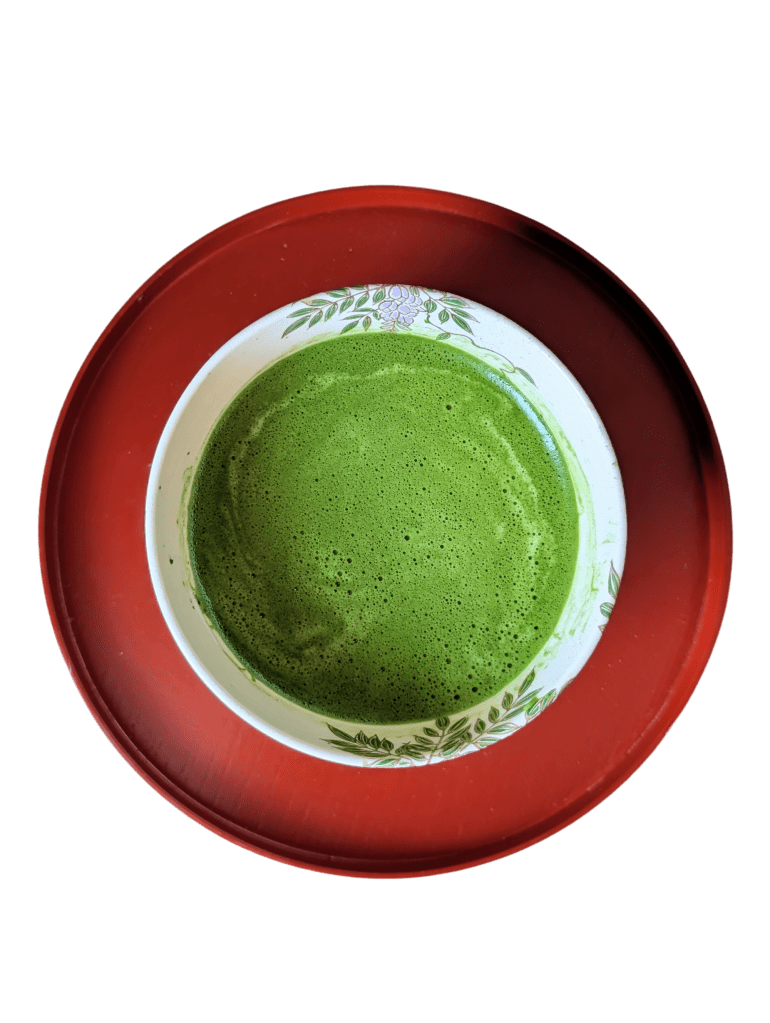
When dry this matcha has an aroma that is vegetal, nutty, earthy, smokey and softly sweet, with notes of porridge oats and buttered popcorn. With the addition of water, all previously mentioned notes are much more amplified, with the notes of dry porridge transforming into warm freshly made porridge, with a toasty creaminess.
Rather than just giving you my notes from one bowl of matcha prepared as usucha & leaving it at that, I instead want to share with you the results of all of my different preparation experiments & how the flavour profile, texture and finish change when you alter things like water temperature & preparation technique & add thing like ice & milk into the equation.
As always with each matcha, I start off at my baseline and prepare it as usucha with water at a temperature of 65-70, this is how I prepare usucha in my day to day life, so it makes sense to use this as my baseline.

As usucha w/ the usual cooler temp water aroma 65-70: Rich umami, unique smokiness, nutty (roasted pecans), earthy greenness, refreshing melona (melon ice bar), freshly made porridge with a small amount of forest honey added, texturally smooth and softly creamy and fresh, with only a touch of dryness & a finish that include smokiness, nuttiness and lingering notes of melona (ice bars).
As usucha with hotter temp water: When prepared with hotter temperature water, it begins with much more bitterness, however it doesn’t stick around for too long and dissipates into earthy vegetables, underpinned with light nuttiness and smokiness. The sweet notes of melona (melon ice bars) are still present, but much more muted than they were when prepared with cooler temp water. Creaminess does appear a little when it is allowed to cool in the bowl, but is not present when first prepared.
So overall, I wouldn’t recommend preparing this matcha with hotter temp water, as the balance it had when prepared as I would normally prepare usucha was lost. I thought, given the flavour profile of this matcha, that this would be the case, but you never truly know when a matcha might surprise you, so it’s always worth doing this temperature experiment. Texturally when prepared this way it is sharp, much more dry and bitter.

As a hot latte: While the notes within the flavour profile of this matcha and the strength and richness of it can stand up to the addition of oat milk, a lot of the subtle notes are missed when it is prepared as a hot latte, so while I wouldn’t say no to drinking this way, I just wouldn’t prepare it this way regularly, as I do thoroughly enjoy the subtle notes to be found within the flavour profile.
As iced usucha: As iced usucha, I was unsure of how the stronger, richer, earthy vegetal notes were going to work, as I do usually prefer a lighter, creamy, citrusy profile for iced usucha, however this matcha works quite well when prepared this way, with those notes of melona (ice bars) being much more noticeable and the smokiness becoming a little subtler, but still remaining present. The addition of slices of lemon or lime does provide a citrusy brightness that I usually seek to find in iced usucha.
Speaking of lime, I did use this matcha to create a drink from the Mix & Matcha recipe book that used iced earl grey as base, with the addition of usucha & slices of lime. While it is not a combination I would have ever thought of, it worked so well, because this matcha’s more robust flavour profile ensured that the matcha was not overshadowed by the other flavours.

As an iced latte: This matcha works perfectly when prepared as an iced latte, both on its own with just oat milk added & also with the addition of other flavours like lemon curd and plum conserve that either helps to brighten the richer, umami, smokiness of this matcha, or pair beautifully with them to create a latte that tastes like autumn. My final iced latte that I made with this matcha was a standard iced latte with the addition of earl grey ice cubes, and the additional florals added really amplified that note within the matcha and paired perfectly with earthy, nutty smokiness of the matcha.
Overall, my favourite ways to enjoy this matcha are as usucha, iced usucha (with slices of lemon and lime) and as an iced latte (both on its own and with additions of other elements such as lemon curd and plum conserve & earl grey ice cubes).

Pairs well with: Bonne Maman Plum Conserve, Strawberry Cream Mochi, Sweet Potato Monaka & Bonne Maman Lemon Curd
The plum paired brilliantly with the richness and the smokiness, I made a matcha latte with this matcha in the jar of plum conserve as opposed to rinsing the jar clean, and despite it being iced, the flavour profile made me think of autumn and I can’t wait to make it again next time I come to the end of a jar of plum conserve.
The strawberry cream mochi paired well with the earth greenness and vegetal umami notes, adding in brightness and creaminess that lifted the flavour profile and helped to balance it.

The sweet potato Monaka, just like the plum conserve paired perfectly with the rich, earth, smoky and nutty notes within this matcha and provided such an autumnal experience overall.
Beyond these pairings however, I am certain it would pair fantastically with many other treats, if you have tried this matcha paired with anything, I would love to know your ideal pairings so I can try them for myself in the future.
Art Pairing: Elderwood Path – Jenni Inberg
When I first came across Jenni Inberg’s work while searching for the perfect visual counterpart that could encapsulate the entire experience provided by this matcha, I found myself immediately drawn to this painting and when I discovered that it was inspired by the ancient, moss-covered forests of Yakushima, Japan, it immediately became the top contender for this pairing. Not only did the inspiration for the painting align with this tea perfectly, the additional connections within the subject matter, colour palette and feeling all helped me make the final decision.
When it comes to the colour palette, just like many of the pieces I have picked to pair with matcha in the past, It had to revolve primarily around the colour green, but not in a way that lacked depth or complexity. There needed to be many shades used in order to represent the many shades of green that present themselves as this matcha transforms thought preparation. Within those greens, I wanted find texture, brightness, darkness & richness, all of which are on full display in Inberg’s Elderwood Forest and the abstract expression created, with the controlled minimal palette of greens, charcoals, soft greys & cream on display all being found within the flavour & aroma profiles of the matcha.
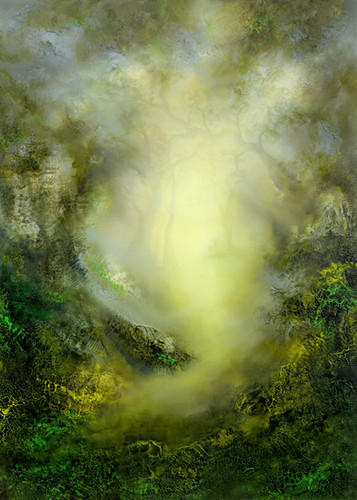
In Inberg’s words “Elderwood Path invites you into a quiet world where reality and imagination gently intertwine” & couldn’t agree more. It’s wonderfully ethereal and otherworldly, but its subject matter is still grounded within reality, almost as if the Elderwood Path is serving as a pathway between two worlds and this is their merging point. The warm hazy dreamlike effect concentrated at the center of the canvas represents two aspects of this matcha for me, the soft hazy smokiness & its varied creamy notes that change depending on how it is prepared.
The hidden details of a stag standing at the end of the path and an owl resting in the trees, both of which reveal themselves should you give yourself enough time to observe the painting closer, are for me a great representation of the notes within this matcha that can only be found when you prepare it in a multitude of ways, with a clear mind and full focus.
I’m so thankful to have been introduced to Jenni Inberg and her art at the perfect time to materialise this pairing & I have no doubt in my mind that this will not be the last time that she features in a tea & art pairing.
If this post has inspired you to want to try this matcha for yourself, you can find it here on the Haru Matcha website & if you use the code KIMBERLEYSKYUSU to get 10% off of your order or if you use this link, the discount will automatically be added to your basket.
Until next time, Happy Steeping – Kimberley


You must be logged in to post a comment.